
150th Anniversary Concert
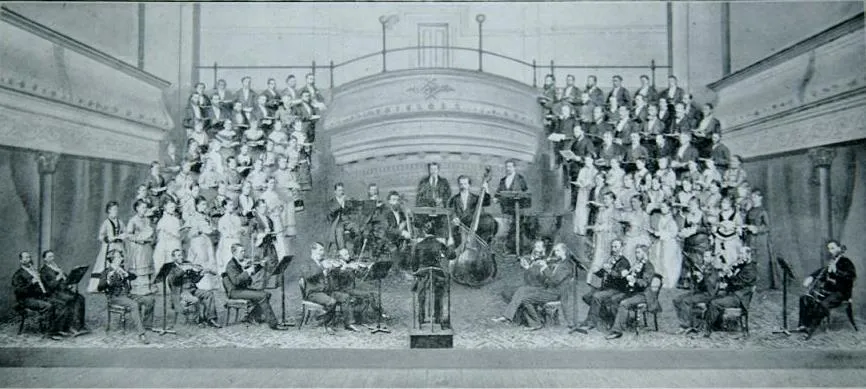
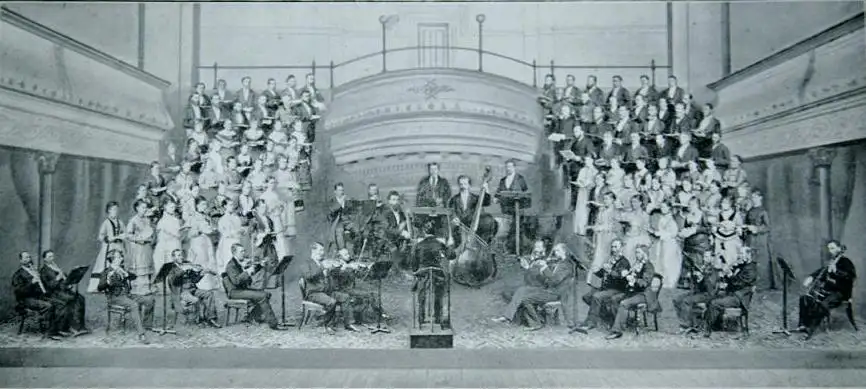
(Photograph by Adams and Stillard, Artists: Southampton Philharmonic Society, 1876; Conductor, Alexander Rowland)
- Southampton Philharmonic Choir & Southampton University Phil
- Hampshire County Children’s Choir
- New London Sinfonia
- David Gibson (conductor)
- John Harle (saxophone)
- Amanda Forbes (soprano)
- Victoria Simmonds (mezzo)
- Stephen Brown (tenor)
- Richard Morris (baritone)
Southampton Philharmonic Choir’s 150th Anniversary Concert
- Beethoven - Coriolan Overture
- Muldowney - The Fall of Jerusalem
- Mozart - Requiem
1860 - 2010 — 150 Glorious Years
Southampton Philharmonic Choir was founded in 1860, on the wave of choral enthusiasm generated by the festival of massed singing at Crystal Palace in London in 1859, on the 100th anniversary year of Handel’s death.
This makes the choir Southampton’s longest-established music society. 150 years later we are bigger and better than ever, joined now by the student singers of the Southampton University Phil. We perform with top-class soloists and a professional orchestra - the New London Sinfonia - conducted by musical director David Gibson.
In this anniversary concert we are celebrating with two choral works that are great favourites with the choir.
The Fall of Jerusalem
The first is Dominic Muldowney’s The Fall of Jerusalem, with words by poet and writer James Fenton. This oratorio was commissioned jointly by Southampton Philharmonic Choir and Leeds Festival Chorus for the Millennium, and both choirs performed the new work, separately, in March 2000 in the presence of the composer. Many of our members said that this was the highlight of their choral singing careers, and we are greatly looking forward to this second performance. Dominic Muldowney was born and educated in Southampton, and has composed songs for David Bowie and Sting, and TV and film theme tunes, as well as concert pieces. The oratorio is about the Roman destruction of Jerusalem in 70 AD, although the shadow of the 20th century Holocaust hovers musically over the piece. Haunting saxophone solos allude to klezmer music, and the closing youth chorus is based on a melody from a Jewish ghetto of the 1930s. For this work we are joined by leading saxophonist John Harle and baritone Richard Morris, both of whom also performed in Southampton’s performance of this work in 2000. Hampshire County Children’s Choir will provide the youth chorus.
Mozart’s Requiem
With its furious Dies Irae, seems a fitting piece to follow this. The composition of this magnificent Requiem is shrouded in mystery and intrigue, employed to good effect, if not historical accuracy, in the play and film Amadeus. It was commissioned in 1791 by “a mysterious man in grey” whom Mozart, already very ill, took to be a visitation from the grave. Following Mozart’s death later that year, the work was completed by others, but includes enough of Mozart’s genius to be a masterpiece.