
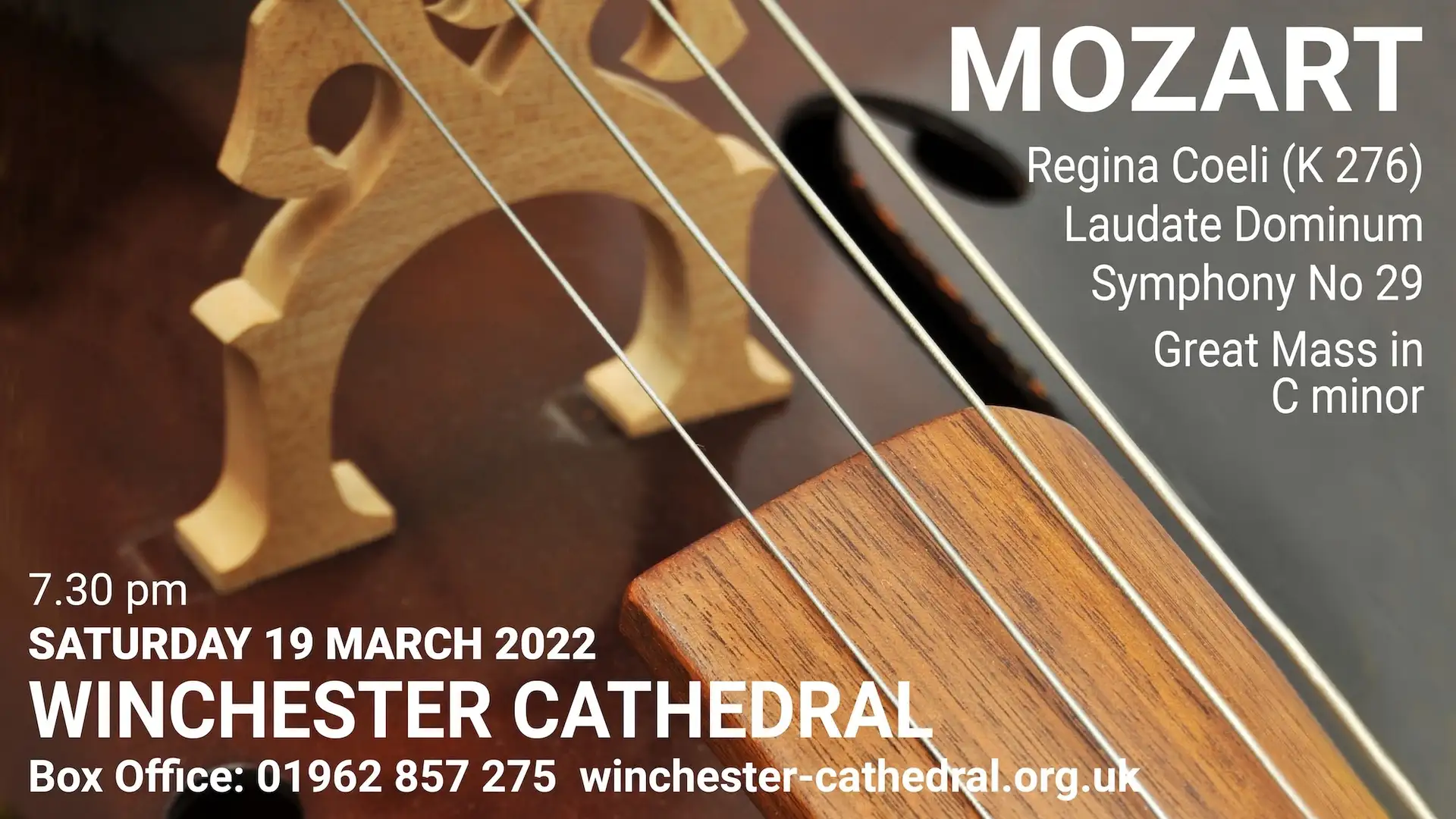
Mozart: Great Mass in C minor, Regina Coeli, Laudate Dominum, Symphony No. 29
- Emma Tring soprano
- Marta Fontanals-Simmons mezzo soprano
- Benjamin Durrant tenor
- Simon Gallear baritone
- Southampton Philharmonic Choir
- Southampton University Philharmonic Choir
- New London Sinfonia - David Gibson conductor
Southampton Philharmonic Choir and Southampton University Philharmonic Choir return to the splendour of Winchester Cathedral for the first time since 14 March 2020 and are delighted to be joined by the New London Sinfonia conducted by David Gibson in a programme of music by Mozart. It's easy to forget how young Mozart was when he died when we look at his prolific output. Some of today’s pieces were written when he was still relatively young, with the Mass a realtively "mature" piece composed when he was around 27 years old.
Regina Coeli (K276) is believed to have been composed in 1779 (stylistically, it is similar to his Dominican Vespers, composed in that year). It was the last of three settings that he made of this text, which is the third of four Marian Antiphons that are sung from Holy Saturday to the Saturday in Whitsuntide.
Laudate Dominum is the penultimate movement of Mozart’s second setting of the Vesperae solennes de Confessore composed in 1780 and probably intended for use in Salzburg Cathedral. The Laudate Dominum is a particularly beautiful piece, often performed as a "standalone" work in a concert setting.
Symphony No. 29 was one of a set of three symphonies written when Mozart was 18 years old and shortly after visiting his father in Italy. Leopold Mozart was keen to promote the immense talent of his son to his employer, the Archbishop of Salzburg. This introduction clearly worked as the symphonies and several other compositions saw Wolfgang rewarded with the post of concert-master at the court.
Mozart married soprano Constanze Weber in August 1782 to the disapproval of his father, Leopold. The couple visited him in Salzburg a year later with this new Mass in C Minor, which had originally been promised to Constanze to celebrate the birth of their first child, Raimund Leopold, on 17 June. The Mass was performed in its unfinished form in St Peter’s Church on 25 August with Constanze singing the spectacular soprano arias that Mozart had written to display her virtuosity to any potential sponsors – and probably also to his father.